
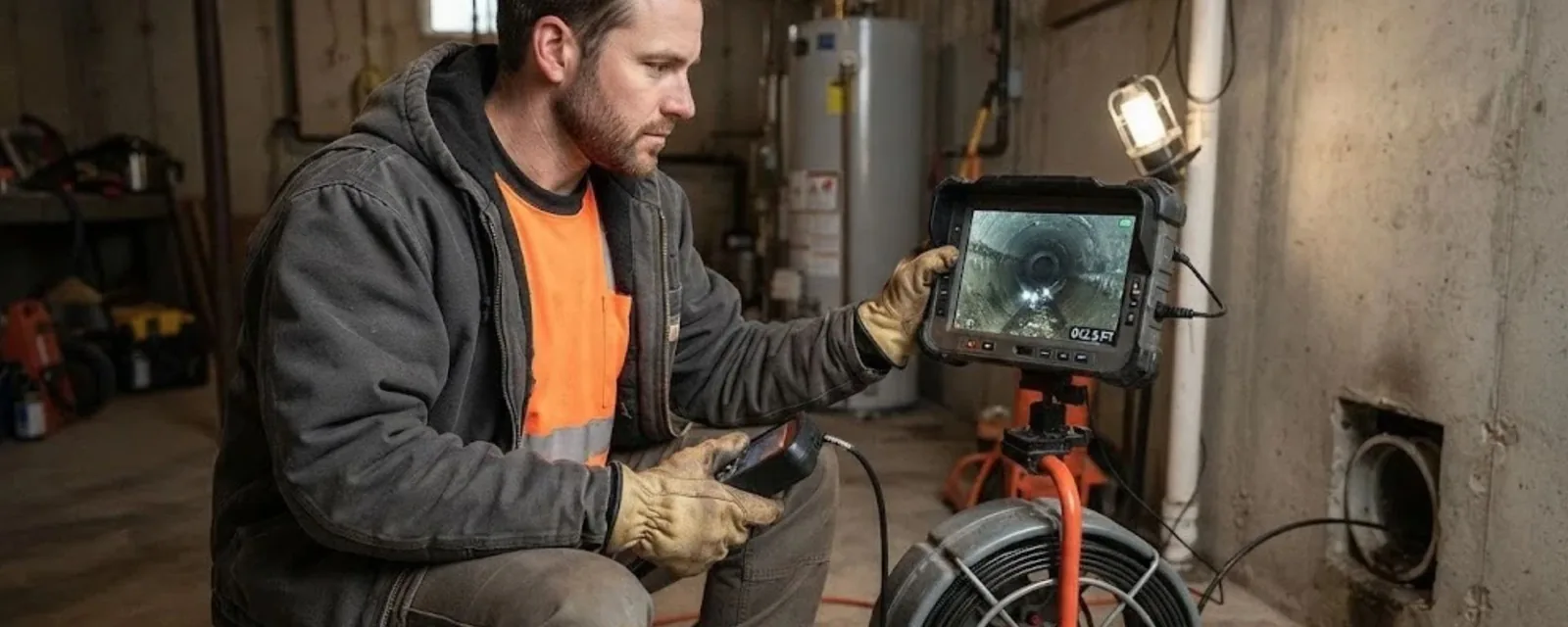
Epoxy pipe lining coats the inside of a pipe with a resin that hardens into a new inner wall. In professional lining, a liner saturated with resin is pulled or inverted into the pipe and cured in place. The result is a pipe inside the old pipe that can seal cracks and small leaks and slow future corrosion.
Kits for homeowners exist, and the idea is appealing: no digging and no tearing out walls. But lining is an exacting process. This guide explains what it does, where DIY goes wrong and when a professional is the better choice.
How lining works
The pipe is cleaned thoroughly, often by cabling or jetting, then inspected with a camera. A liner or coating is applied and cured with air pressure, heat or light, depending on the system. After curing, any branch connections are reopened, and the pipe is camera checked.
The prep step decides the result. Resin does not bond to scale, grease or loose rust, so a poorly cleaned pipe leads to a failed lining. That is why camera and cleaning come first. Hydro jetting and sewer inspection describe those steps.
What lining can and cannot fix
Lining suits pipes that are still round and continuous but have cracks, pinholes, joint leaks or root entry points. It does not fix a collapsed pipe, a badly offset joint or a sag that holds water. For those, digging or another method is needed.
It also reduces the pipe diameter slightly. In most cases flow is fine, but a pipe that is already tight needs careful evaluation.
Thinking about lining a pipe?
Call to book a camera look and honest advice on your options.
Where do-it-yourself lining goes wrong
Poor cleaning, wrong mix ratios, trapped air, wrong temperature and cure time errors all lead to a liner that peels or leaves gaps. A failed liner can block the pipe, and clearing it may mean cutting the pipe out. That turns a small repair into a bigger job.
Another risk is using lining on a pipe that cannot be fixed that way. Without a camera, you may be lining over a defect that needed another repair.
When to hire a professional
For sewer laterals and supply lines inside walls, a professional has the equipment to clean, inspect, line and verify. They can also tell you honestly if lining is the right answer. See sewer line repair for how the methods compare.
For a small, accessible drain line under a sink, a simple replacement of the pipe is usually cheaper and more durable than lining.
Alternatives to consider
Spot repair, pipe replacement and repiping are all options, depending on the pipe. For supply lines with repeated leaks, repiping may be a better investment than coating the old pipe.
What to ask a lining contractor
Ask what they will do to clean and inspect the pipe first, and whether you will see the before and after footage. Ask what lining system they use, how long it is expected to last and what warranty comes with the work. Ask what happens to branch connections and how they are reopened.
Also ask what they will do if the camera shows a collapse or an offset that lining cannot fix, and whether the price changes. A contractor who answers plainly and in writing is a better bet than one who promises a fix for every pipe.
Lining versus other repairs
A quick comparison.
| Method | Best for | Limits |
|---|---|---|
| Epoxy or cured-in-place lining | Intact pipe with cracks or joint leaks | Needs clean pipe and a camera check |
| Spot repair | One damaged section | Needs digging at that point |
| Pipe bursting | Failed pipe along a run | Needs entry and exit pits |
| Repiping | Repeated supply leaks | Largest project |
Permits and responsibility around La Puente
Pipe work beyond a simple repair may need a permit. Ask the City of La Puente Building and Safety Division, which handles building, electrical, mechanical and plumbing permits, whether lining a sewer lateral or a supply line falls under one.
Sewer laterals are generally the owner's responsibility up to the connection with the public sewer. Ask the sewer agency about its rules on work near the connection before you start.
Pipe materials and repairs in California follow the California Plumbing Code, based on the Uniform Plumbing Code (UPC), so ask whether a lining product is accepted for the use you have in mind.
Source type: City building department page and sewer agency guidance
Frequently asked questions
Durability depends on prep, materials and the pipe. A professional can explain expected life for your pipe.
Kits exist, but prep and curing are exacting and errors are hard to undo.
It reduces the diameter slightly. A camera and an evaluation show if it is a concern.
No. A collapse needs another method.
It depends on the pipe, access and surface above. A written scope shows the comparison.
Ask the City of La Puente Building and Safety Division about permits and the sewer agency about work near the connection.
Weighing your options? Call and book a camera look.
☎ Call (626) 898-6169Where to go from here
Read about sewer line repair and sewer inspection. We serve West Covina and Hacienda Heights too.