
Emergency slab leak repair in La Puente deals with water escaping from a pipe that runs in or under the concrete foundation. Because the pipe is buried, the leak can run for weeks before it shows, and it can undermine soil, lift flooring and push a water bill sharply upward.
The first job is to confirm that the leak is under the slab and find its exact position. The second is to choose a repair that suits the pipe, the floor and the budget, whether that is breaking the slab at the leak, rerouting the line through the attic or walls, or lining the pipe.
Signs of a slab leak that need a call today
A warm patch on the floor, a sound of running water with everything off, wet carpet at the edge of a room or a meter that spins with all fixtures closed are urgent signs. Water under a slab can erode soil and damage flooring. The 24/7 line is open, and the dispatcher arranges a licensed plumber.
What to do before we arrive
- Close the main water valve to stop the loss, then check whether the meter keeps moving.
- Keep children and pets off any warm or wet floor area.
- Take photos of the damp or warm spots and note the time you first noticed them.
- Move rugs and furniture off the area and avoid running appliances that use water.
How a slab leak is found
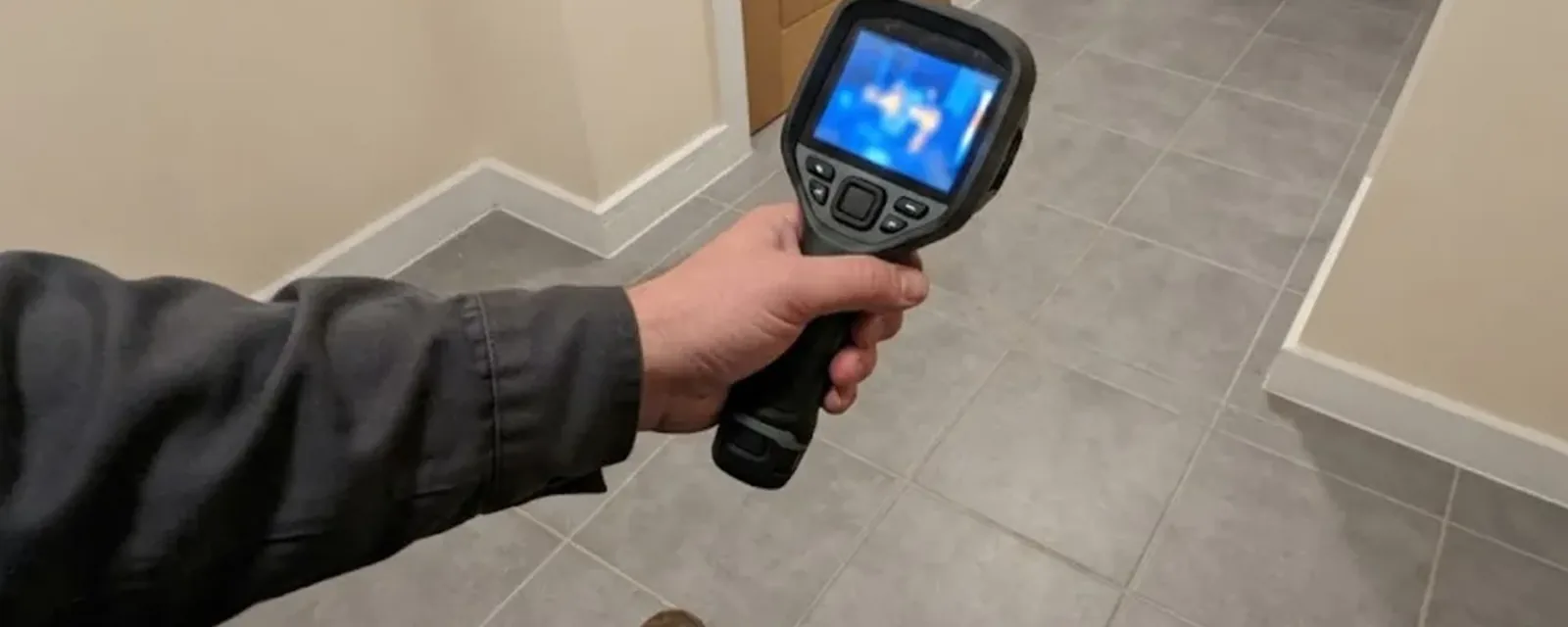
The plumber begins by isolating the system to confirm the leak is in the pressurized lines. Then electronic listening equipment picks up the sound of water escaping from a pipe, and a locator marks the spot at the surface. Thermal imaging helps when a hot water line leaks, since the floor above is warmer.
This work limits the opening in the slab to a small area. The plumber should explain what they found and how sure they are before any cutting begins.
Repair choices for a slab leak
There are three common paths. Direct repair breaks the slab at the leak, replaces the pipe section and patches the concrete. Rerouting abandons the leaking line and runs new pipe through walls or the attic. Lining or coating the pipe is possible in some cases but depends on the pipe condition.
Each has trade-offs. Direct repair is the fastest for a single leak but disrupts flooring. Rerouting costs more but avoids the slab and addresses a tired line. If several leaks have appeared, repiping is a bigger investment that solves the pattern.
Floor warm or water running with everything off?
Call and describe the signs. We start with a pinpoint search.
What causes slab leaks
Copper lines in contact with concrete can wear from vibration and abrasion. Chemical reactions in the soil can corrode pipe from outside, and water chemistry can corrode it from inside. Settling and ground movement stress joints and bends.
Hot water lines tend to fail sooner than cold lines because of expansion and contraction. Drain lines under a slab can also leak, and they are checked with a camera, covered under sewer inspection.
Protecting floors and finishes
Tile, wood and carpet each need a different plan. Ask the plumber how much of the floor will be opened, whether matching tile is available and who handles the finish work. A clear scope before the job avoids surprises.
If water has already spread, flooring may need to dry or be replaced. A drying contractor can measure moisture and advise. The plumber fixes the pipe, but a drying company handles the structure.
Slab leak repair paths compared
Each path suits a different situation.
| Path | Best for | Trade-off |
|---|---|---|
| Direct repair | One accessible leak | Break and patch concrete |
| Reroute through walls | Aging line or repeat leaks | Higher cost, less slab damage |
| Pipe lining or coating | Sound pipe with small defects | Not suitable for every pipe |
| Repipe the house | Many leaks across the system | Largest upfront cost |
What affects the cost of slab leak repair
Costs vary widely with the method, the floor above and how far the plumber must go to reach the leak.
Insurance note: some policies cover access costs for a sudden leak but exclude the pipe itself or long-term seepage. Ask your insurer before work starts and keep the detection report.
Want your real number?Call (626) 898-6169 for a clear price before any cutting begins.
How a slab leak call works
Call and describe
Tell the dispatcher about warm spots, sounds or meter movement.
Isolate and locate
The plumber tests the system and pinpoints the leak.
Choose the repair
You see the options and the price for each.
Repair and test
The work is done, pressure is tested and the area is closed up.
Slabs in La Puente neighborhoods
Many La Puente homes were built on concrete slabs in the postwar decades, with supply lines laid in or under the slab. As those lines age, leaks become more likely. A house with original plumbing is a candidate for a slab leak sooner than a newer one.
If you are buying a home in the area, ask whether the seller has had slab leak repairs or repiping. A pressure test during the inspection period is inexpensive compared with a repair after closing.
Slab leak repairs follow the California Plumbing Code, based on the Uniform Plumbing Code (UPC). Rerouting through walls or the attic is a larger scope than a spot repair, so ask the City of La Puente Building and Safety Division about permits, and call 811 before anyone digs outside.
Slab Leak Repair questions from La Puente homeowners
Yes. The emergency line is answered 24/7, and a licensed plumber can be dispatched when a leak is active.
Warm floor spots, the sound of running water, a spinning meter with fixtures off and damp flooring are common signs. A plumber confirms it by testing.
Sometimes. Rerouting through walls or the attic avoids it. The plumber explains the options after locating the leak.
Direct repair may take a day. Rerouting and repiping take longer. The plumber gives a timeline after the leak is found.
Water can erode soil under a slab over time. Acting early limits that risk.
Yes. See West Covina and Hacienda Heights for local pages.
Think you have a slab leak? Call and describe what you see.
☎ Call (626) 898-6169If detection shows a pattern of failures, repiping explains the larger fix. For a leak above ground, see burst pipe repair or start with leak detection.