
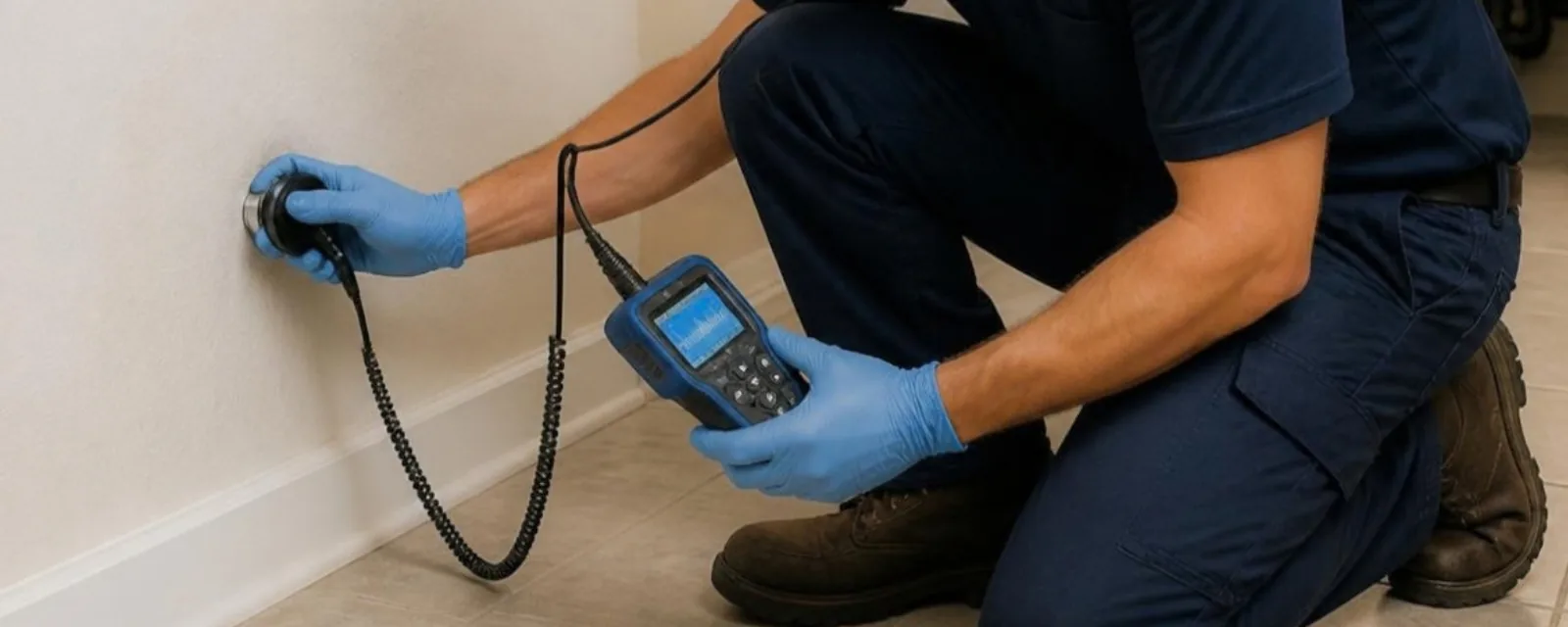
A hidden leak is one you cannot see. It may be in a wall, under a slab, in the yard or in a toilet tank. It often shows up as a higher bill, a meter that moves when nothing is running or a damp spot that never dries. Finding it early limits damage to floors and walls.
This guide shows the simple tests anyone can do, explains what each result means and covers when to call a plumber to pinpoint the leak without tearing into your walls.
Read the water meter
Turn off every fixture and appliance, including the ice maker and irrigation. Find the water meter, usually in a box near the street, and look at the leak indicator, a small dial or triangle that spins when water flows. If it moves, water is going somewhere.
Take a photo of the dial, wait an hour with no use and check again. If the numbers changed, you have a leak. Then close the house shutoff valve and look again. If the meter stops, the leak is inside. If it still moves, the leak is in the buried line between the meter and the house, covered under water line repair.
The food-color test for silent toilet leaks
A worn flapper can leak into the bowl without making a sound. Add a few drops of food coloring to the tank, wait fifteen minutes without flushing and look in the bowl. Color in the bowl means the flapper is leaking.
This is a cheap fix, and it is one of the most common causes of a high bill. Toilet repair explains the parts involved.
Meter moving with everything off?
Call and describe it. We start the search from there.
Signs in the house
Look for stains on ceilings and walls, peeling paint, bubbling drywall, a musty smell, warped baseboards or floors that feel warm or soft. Listen for the hiss of running water when everything is off. Check under sinks and around the water heater for drips.
A warm spot on a slab floor can point to a hot water line leak. Slab leak repair covers what happens next.
Check the yard and irrigation
A patch of soggy or unusually green lawn, a wet spot near the meter or a damp driveway edge may be a buried line leak. Irrigation valves and risers also leak, and a stuck valve can run for days. Turn the irrigation off at its shutoff and watch the meter.
What a plumber adds
Tests tell you a leak exists. A plumber finds where. Listening gear picks up the sound of escaping water. Thermal imaging and moisture meters map damp areas. Pressure tests isolate sections of pipe. The aim is to open a small area, not a whole wall. See leak detection for the full process.
What to do once you think you have found a leak
Close the main water valve if water is flowing and photograph everything before you move belongings. Note the meter reading and the time. Mop up standing water and run a fan so floors and walls begin to dry, since moisture left in drywall and insulation invites mold within a few days.
Then call a plumber and describe your test results in plain words, such as the meter moving with the house valve closed. That tells the dispatcher whether to send gear for the yard or for the walls. Keep your invoice and photos together for an insurance claim, and ask the plumber to note the location of the leak on the paperwork.
Test results and what they mean
Match what you see with the likely cause.
| Result | Likely meaning | Next step |
|---|---|---|
| Meter moves, house valve closed | Buried line leak | Call about water line repair |
| Meter stops when house valve closed | Leak inside the house | Check toilets, then call for detection |
| Color in the toilet bowl | Leaking flapper | Replace the flapper |
| Warm floor spot | Possible hot line leak | Call a plumber |
| Soggy lawn near the meter | Possible service line leak | Call a plumber |
Who handles what in La Puente
The meter belongs to your water provider, and the pipe from the meter to your house is generally the owner's. Check your bill for the provider's name and ask it about its rules for leaks near the meter.
If your property is in unincorporated Valinda, the Los Angeles County report for the area says County Public Works handles waterworks district and sewer maintenance. Either way, a plumber can tell you which side of the meter the leak is on.
Once the leak is found, the repair follows the California Plumbing Code, based on the Uniform Plumbing Code (UPC), and the City of La Puente Building and Safety Division can say whether the work needs a permit.
Source type: County unincorporated area annual report and utility billing information
Frequently asked questions
If the meter moves with every fixture off, you have a leak. If it does not, your use is the cause.
No. Irrigation, guests and seasonal use raise bills. A meter test settles it.
Yes. Slow leaks can run a while before they show.
A silent leak can waste a lot over weeks. It is worth checking.
Yes. Close the main valve to limit damage, then call.
Your water provider handles the meter and street side. Check your bill for its contact information.
Think you have a leak? Call and describe what you found.
☎ Call (626) 898-6169Where to go from here
Read about leak detection and burst pipe repair. We serve Baldwin Park and West Covina too.