
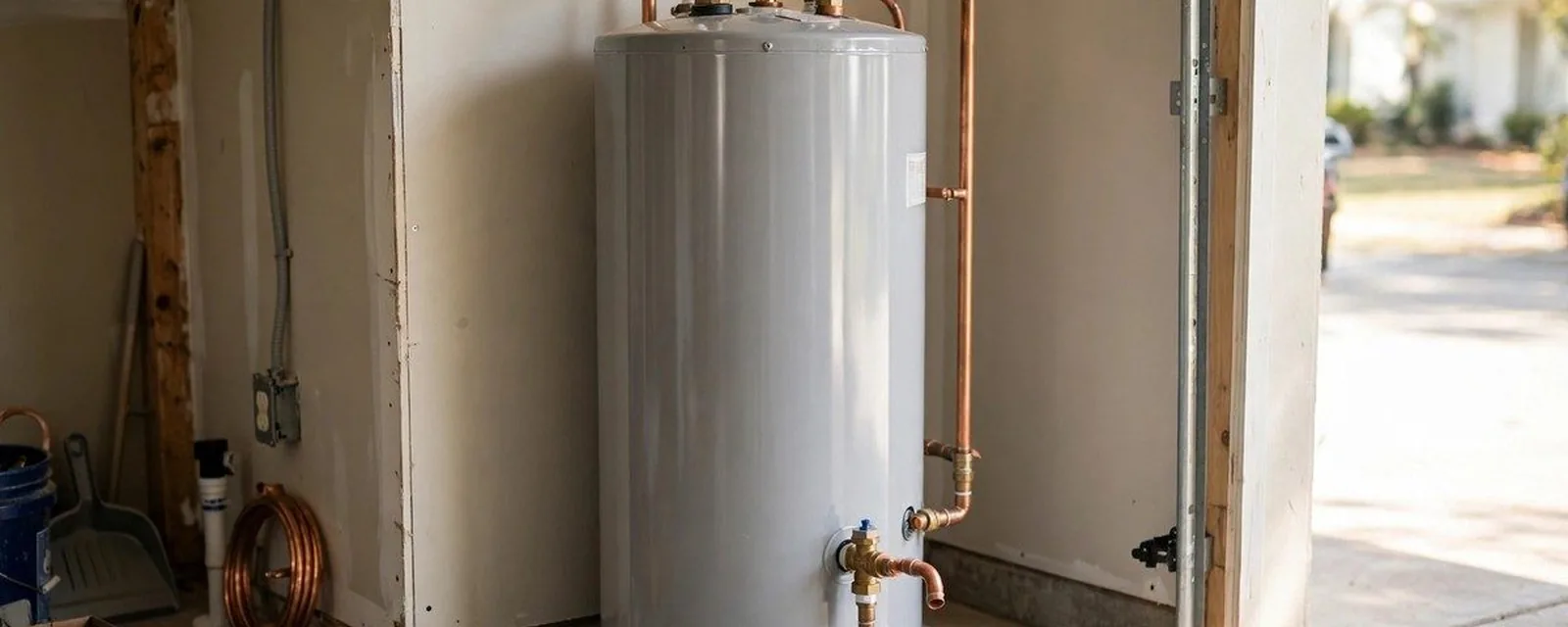
Inside most tank water heaters is a metal rod, usually magnesium or aluminum, threaded into the top of the tank. It corrodes on purpose. Because it is more reactive than the steel tank, it attracts the corrosion that would otherwise eat the tank wall. Once the rod is gone, the tank itself starts to rust.
Replacing a spent rod is one of the cheapest ways to extend the life of a tank, but only if the tank is still sound. This guide covers how the rod works, how often to check it, what replacement involves and when it is too late.
How an anode rod protects the tank
Water in a heater is hot and full of dissolved minerals and oxygen, which makes steel rust. The anode rod gives up metal ions instead, corroding in place of the tank lining. The rod is a consumable part, designed to be used up.
Different rod materials suit different water. Magnesium rods protect well but can react with some water chemistry. Aluminum rods last longer in some conditions. Your plumber can suggest a type for your water and your tank.
How often to check the rod
Many manufacturers suggest checking the rod every few years, and sooner in hard water. The rod is spent when it is mostly bare steel core, deeply pitted or thin. A plumber can pull the rod to look at it, which takes a short visit.
If you have never checked the rod and your heater is several years old, it is worth a look. The check costs far less than a new tank.
Heater more than a few years old?
Call to book an anode rod check and flush.
How replacement works
The plumber turns off power or gas, closes the cold water inlet and drains a little water to lower the level below the rod. The rod sits in a hex head on top of the tank, and removing it often takes a long breaker bar or an impact tool. Clearance above the tank matters, because some rods are long and need room to come out.
Where there is no room, a flexible segmented rod can be used. The new rod goes in with thread sealant rated for the job, the tank is refilled and checked for leaks, and power or gas is restored. See water heater repair for related service work.
When replacement is no longer worth it
If the tank has been leaking, has rust in the water or is old and badly scaled, a new rod will not save it. The same goes for a tank that has run for years with a spent rod, since the damage is already done. In that case, water heater replacement is the honest answer, and the plumber should say so.
Rotten egg smell and anode rods
A sulfur smell in hot water can come from bacteria reacting with a magnesium rod. A plumber may suggest a different rod type or a tank flush. The smell is usually only in the hot water, which separates it from a problem in the supply.
Anode rod condition and what to do
A simple way to read what the plumber finds.
| Rod condition | Meaning | Action |
|---|---|---|
| Thick, mostly intact | Still protecting the tank | Check again later |
| Thin with bare spots | Nearing the end | Replace the rod |
| Mostly bare steel core | Spent | Replace now if tank is sound |
| Tank leaking or rusted | Damage is done | Replace the heater |
Anode rods and the water in La Puente
The La Puente Valley County Water District reported a pH of 7.9 in its 2023 water quality report, and says its supply draws mostly on wells in the Main San Gabriel Basin. Water chemistry like this affects how fast a rod is used up, and a plumber can adjust the schedule once they see your rod.
The tank and its fittings follow the California Plumbing Code, based on the Uniform Plumbing Code (UPC). Your address may be served by a different provider, so check your bill and ask for that provider's report.
California also requires water heaters to be braced, anchored or strapped against earthquake motion under Health and Safety Code section 19211, which is worth checking whenever the heater is serviced.
Source type: Published water quality report and state health and safety code
Frequently asked questions
It depends on water quality and rod type. Hard water uses it up faster.
It can be done, but the rod is often hard to remove and the heater has power or gas. A plumber has the tools and knows the safety steps.
Sometimes a different rod type or a flush helps. A plumber can advise.
No. Tankless units have no tank and no anode rod. They need descaling instead.
A plumber pulls it and looks. It is spent when it is thin, pitted or mostly bare core.
Check your bill for your water provider, then read its latest quality report for pH and hardness.
Want your rod checked? Call and describe your heater.
☎ Call (626) 898-6169Where to go from here
If the heater is failing, see water heater replacement or water heater repair. We serve West Covina and Hacienda Heights too.